email Youtube

Home
Galleries
Blog
Workshops & Calendar
Store
Resources
About
Contact

Blog Archives

Everyone’s a Kid Floor Cushions and Toss Pillows (part 1 of 2)

Monday, March 9th, 2020

Today’s projects are floor cushions and toss pillows from Michael Miller’s adorable new fabric line, SuperFred and Space Pals. As soon as I saw them I knew I’d love to make some floor cushions for my daughter-in-law’s Kindergarten classroom! You can find part 2 here as of March 12, 2020.
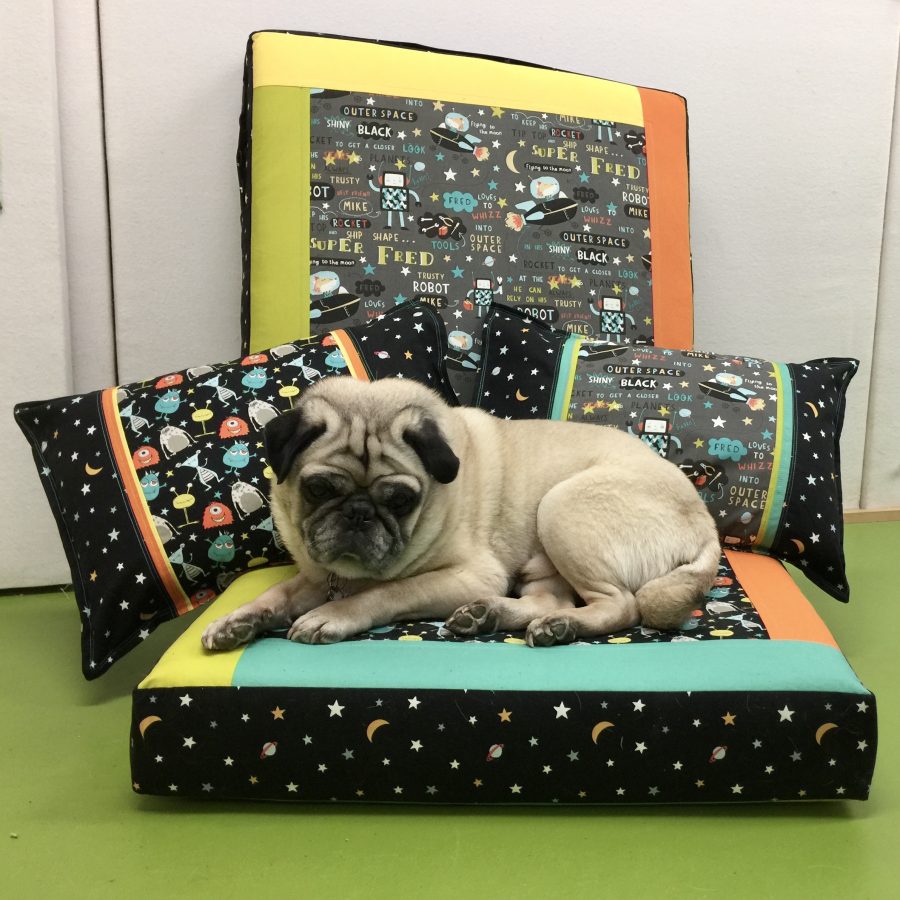
Pigwidgeon was asleep in front of the wood stove but allowed me to move him to another comfy spot to be my model. I am a Michael Miller 2020 Brand Ambassador for 2020, for which this is a monthly project. I’m also a Janome Artisan since 2003.

With the help of my trusty (just try to pry it out of my cold dead hands! I’m taking it with me) Janome M7 Continental, and some experience having done custom home dec work in a previous life, sewing these cushions was easy, and I’d like to share a free pattern for Everyone’s a Kid Floor Cushions and Toss Pillows with you and show you just how easy!
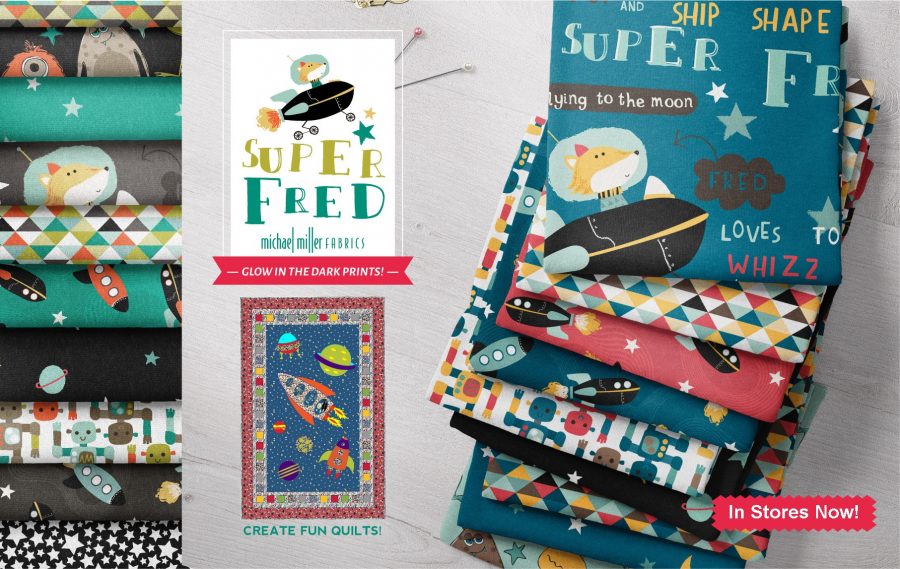
Super Fred! Ask for the collection at your local shop!

Fabric requirements are at the bottom of this post and on the free pattern (link in the previous paragraph). The pattern also has all the other “stuff” you’ll need (zipper, interfacing, and so on) and ridiculously detailed instructions. I will focus on bigger pictures for the “how-to” things in this and my next post even though there are plenty of photos in the pattern.

My Deep-Pocket Placket

So many home dec books and pieces of furniture are made with skimpy zipper plackets that gap open and show the zipper teeth–boo hiss! The designer for whom I worked eons ago had *very* high-end clients, so I developed what I think is a much nicer zipper method. Yes, it uses a couple more inches of fabric, but the zipper is fully concealed, doesn’t gap, and even has a little “garage” at the end to hide the zipper pull. I have leftover (miles of leftover) upholstery zipper tape and pulls from doing custom home dec work, but you can order #5 weight zippers or use heavy duty zippers available at big box stores.
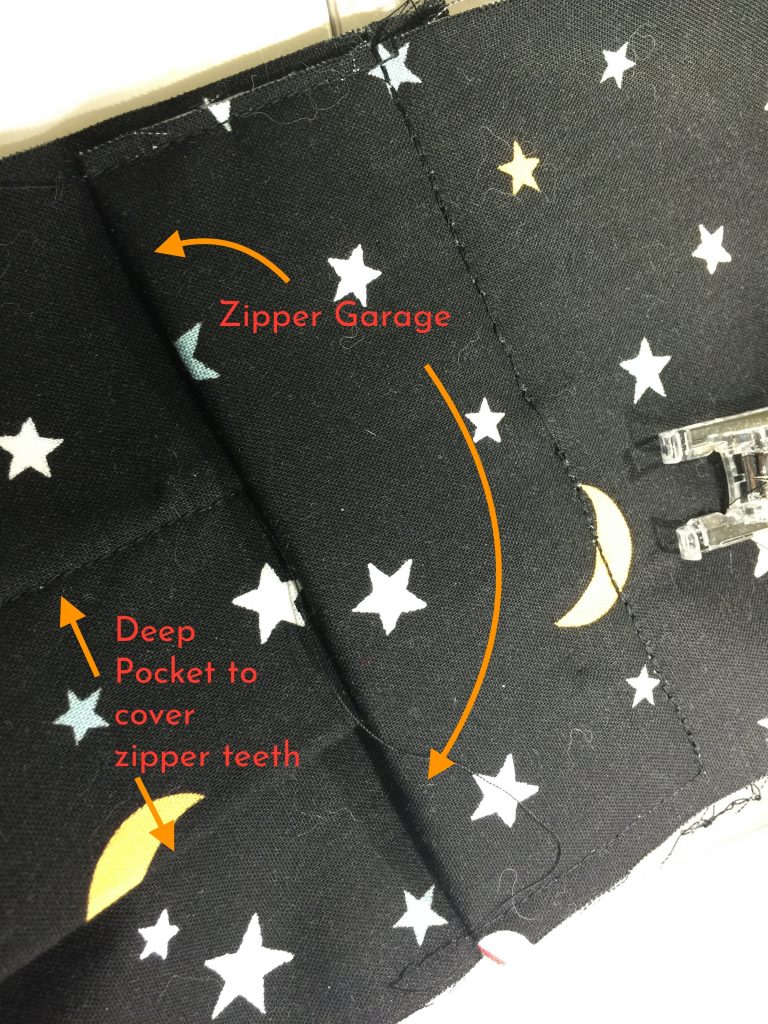
If you’re going to make it at home, make it better than stuff you buy!

The pattern has exact cutting dimensions for the finished zipper gusset (the section of the boxing/sides of a cushion that has the zipper), but honestly I usually cut my strips about an inch wide than I think I’ll need. This gives me some fudging room to get the zipper centered. Once the zipper is sewn in, then I trim it to the desired finished measurements and complete making the gusset.

For this project, I knew the cushions would get a LOT of wear and tear, so I decided to reinforce all of the quilting-weight-cotton fabric with mid-weight fusible interfacing. Then I began assembling the components starting with the zipper. Of course, I was so excited to get started that the interfacing isn’t (yet) on the fabric shown below….I fixed that!
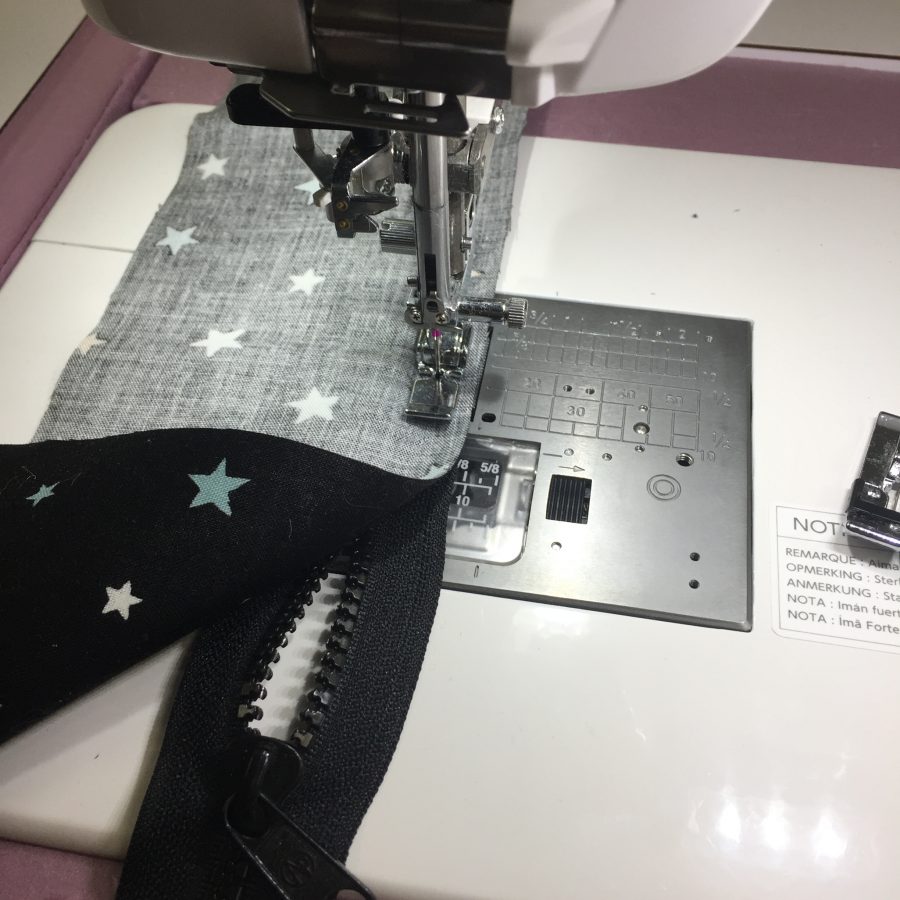
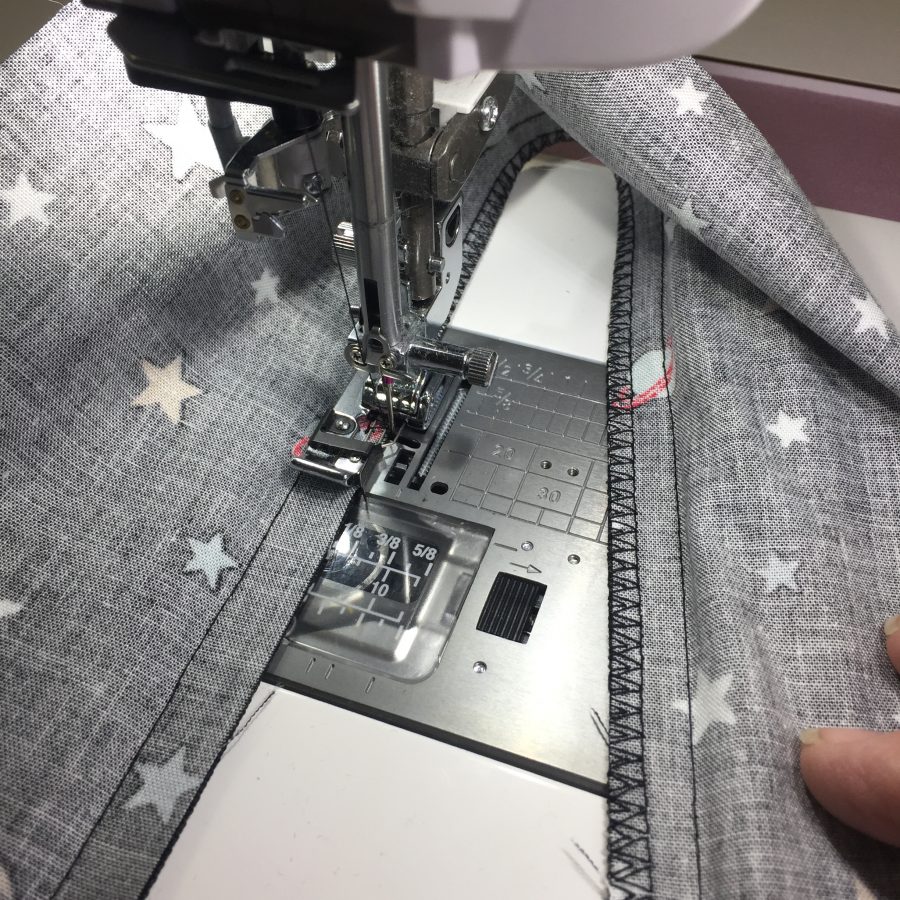
Attach the bottom part of the zipper gusset with the zipper foot. I set the foot so the left edge is next to the zipper teeth; this helps me sew a consistent distance. I set the needle to the center of the foot at first, but decided after checking that was too far away, so see the needle position in the next photo. Be careful not to move the needle to where it will hit the foot. Hand-walk the needle to test position!
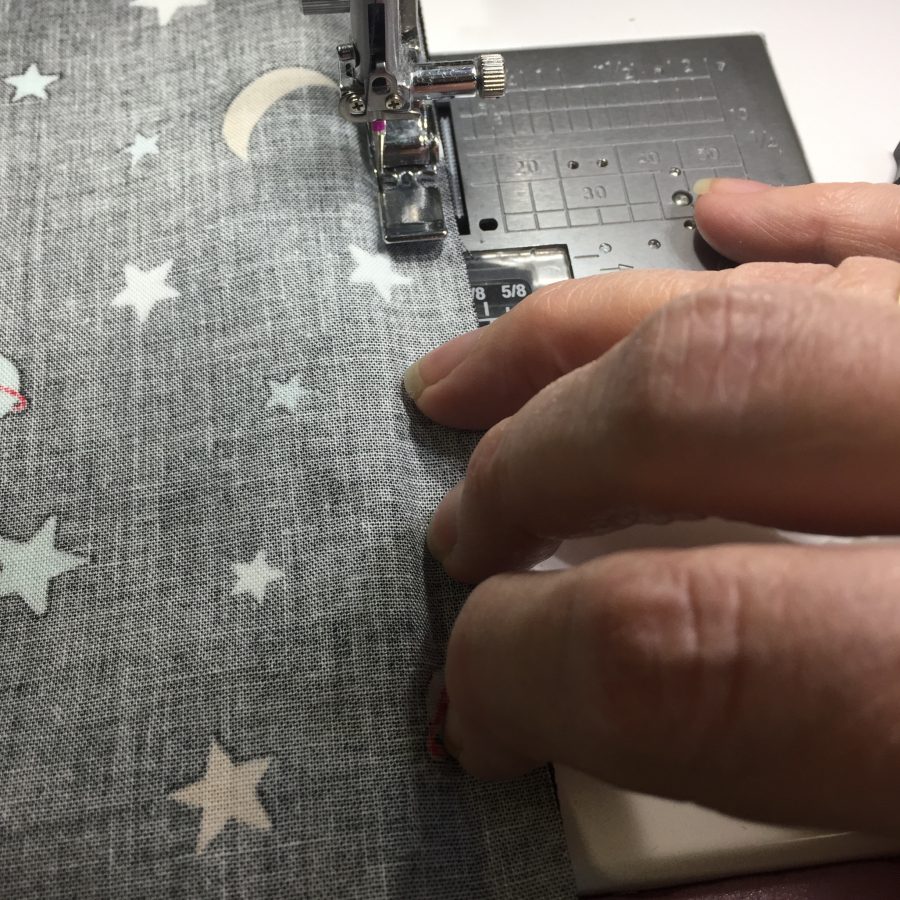
Here’s I’ve adjusted the needle position to use the left opening, but moved to the right–again, hand-walk after changing needle position to make sure you aren’t going to hit the zipper foot itself. I use the fingers of my right hand to squish the fabric down so I can see and feel where the teeth are.
This photo shows the second pass along the zipper, this time with the overcast foot. This is similar to using a serger to clean-finish the edges and it reinforces the stitching. On the M7, it is stitch 15, but there are several choices for an overcast edge stitch. Use something similar on your machine.

The video below shows me using the Janome M7’s “M” foot. Most machines have something similar. The three little wires help hold the fabric flat, the blade keeps the stitch perfectly positioned on the edge of the seam so you get a good-looking, functional, and non-puckered stitch.
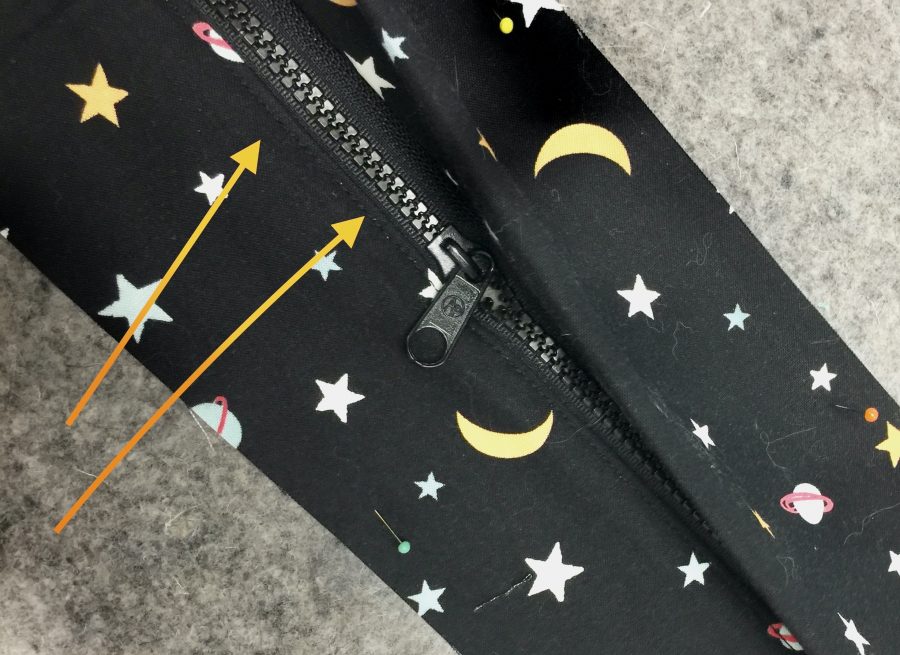
Once the lower fabric strip is sewn and edge-stitched (orange arrows point to edge stitching…hard to see black on black!), I press it away from the zipper teeth and edge stitch. This prevents the fabric from trying to roll up toward the zipper teeth and further reinforces the seam since there is a fair amount of pressure once the cushions is stuffed and being used. This photo also shows that I have attached the upper strip. See photos below for more on how to create a perfectly even and deep placket.

Next, sew the wider upper side of the zipper gusset to the zipper tape using the edge-stitch foot only–you don’t need to do the straight seam close to the teeth as you did with the lower side of the gusset.
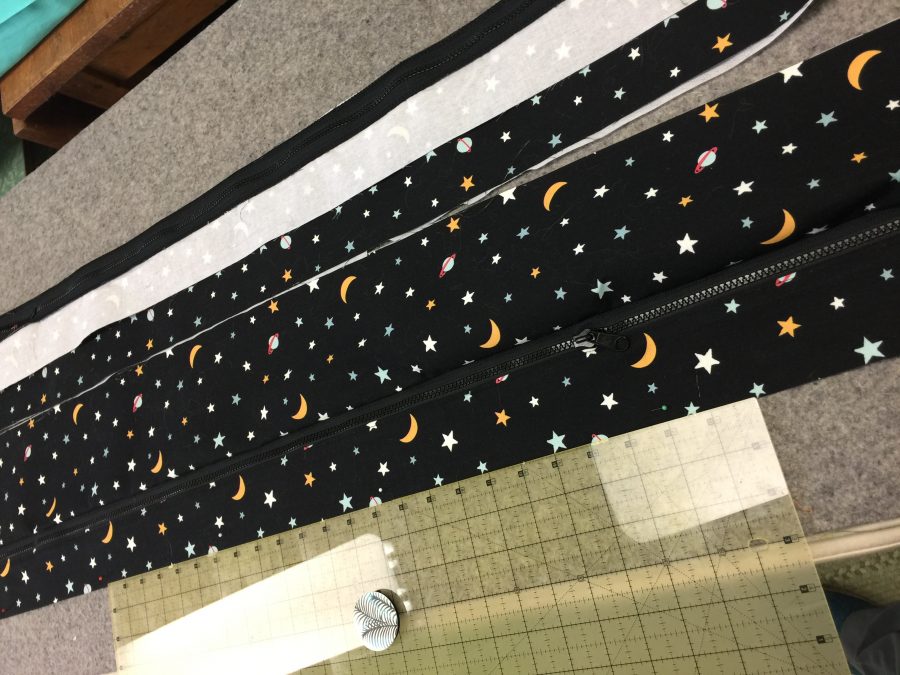
This photo shows TWO zipper gussets. The one on top is as-sewn so you see zipper-interfaced lower edge, upper edge. The lower zipper gusset is the one I’m working on. Pin the lower edge of the zipper to your ironing board, making sure it is perfectly straight–long ruler helps.
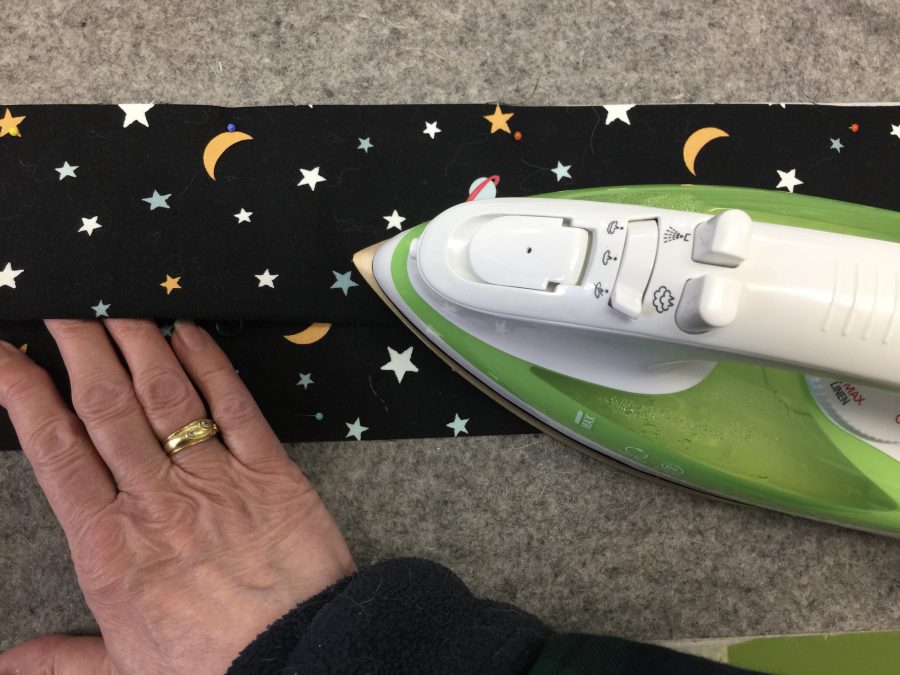
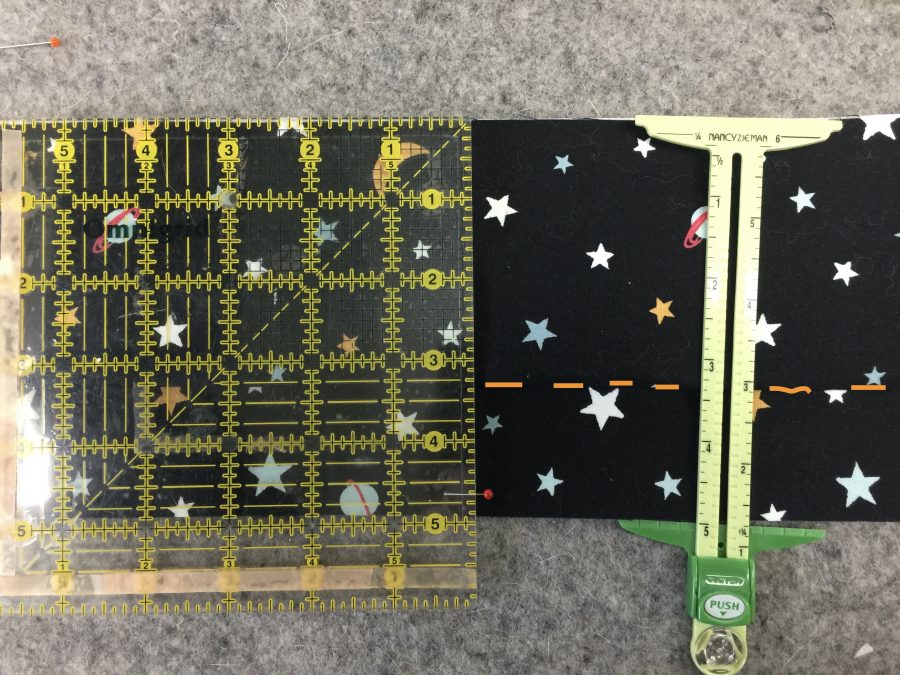
Pin the top edge of your zipper gusset to be 5″ away from the lower edge. This will form a placket to cover the zipper teeth. I found the green Clover hem gauge to be the best tool because the dark green bit snugs up against the raw lower edge and the “wings” are wider making it easier to keep it aligned properly (tilted ever so slightly in this photo), but a small quilting ruler also works to measure width. I highlighted the edge of the placket with orange in Photoshop because you can’t really see the fold of the black fabric!
Press the placket. Then, pin the placket along the folded edge (out of the way of sewing in the next step). Turn the whole shebang over and stitch about 1/8″ from the edge of the zipper tape. This secures the upper side of the zipper. Notice the pinheads holding the placket in place–so glad I got that ginormous wool press thing-a-ma-doo-dad which makes this easy-peasy.

Your next step is to attach the rest of the boxing a.k.a. sides a.k.a. gusset–the fabric that goes around the edge of the cushion. First, use the overcast foot to sew the ends together. BE CAREFUL to NOT stitch through the ZIPPER TEETH! Just lift your presser foot and move over the clunky zipper teeth before finishing that seam. Repeat on the other side.
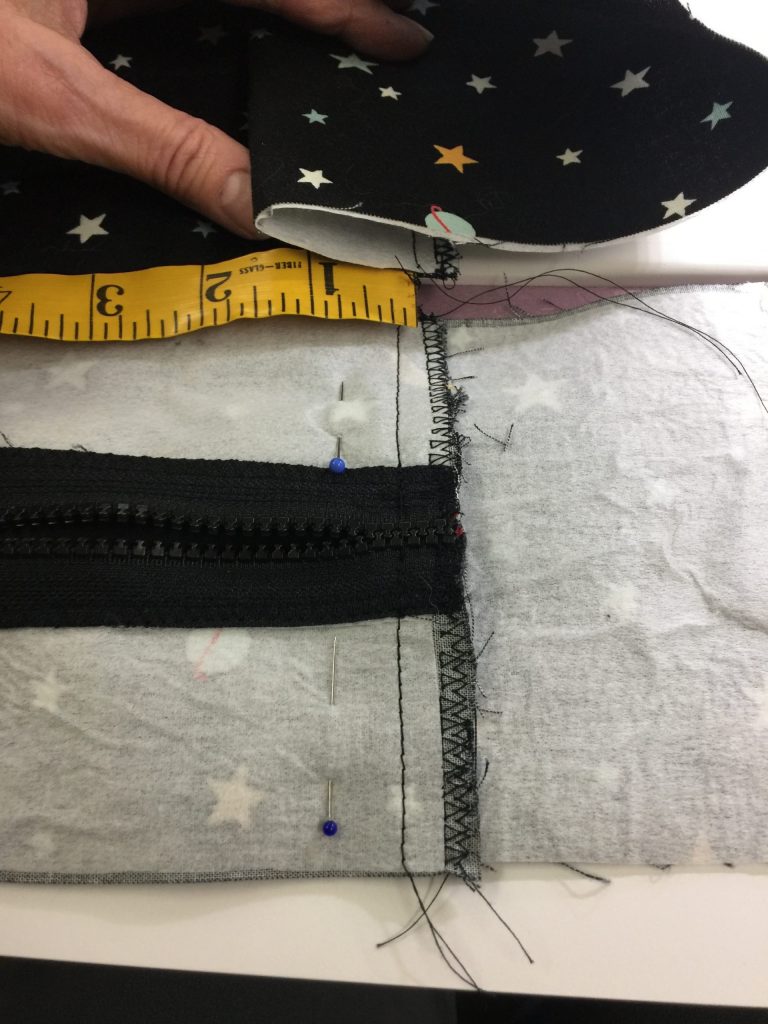
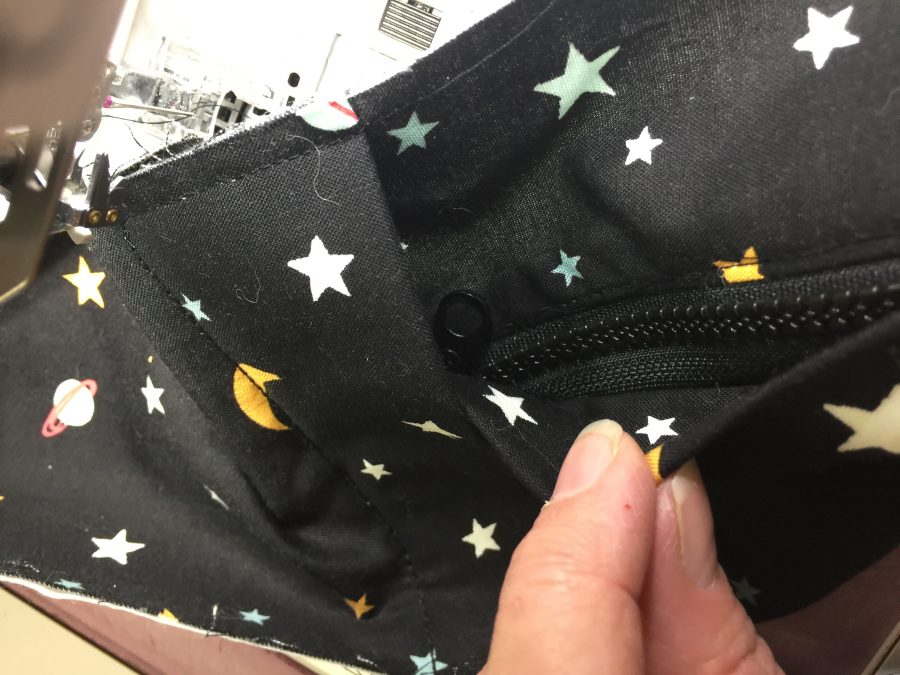
This image shows the seam, edge-stitching, and forming and pinning the “zipper garage”–the little pocket that hides the zipper pull.

Make the first of the little zipper garage / pockets at the zipper ends. You really only need one at the closed end, but I like the cushions to be symmetrical (about the only time I love symmetry in my work!) so I do both ends the same way. In the photo above, you can see that I have made a pocket about 1 1/2″ deep by making a Z-fold (or S- depending on which side you look at). Pin in place (lower part of photo above) and then stitch a straight line about 1/2″ from the raw edges.
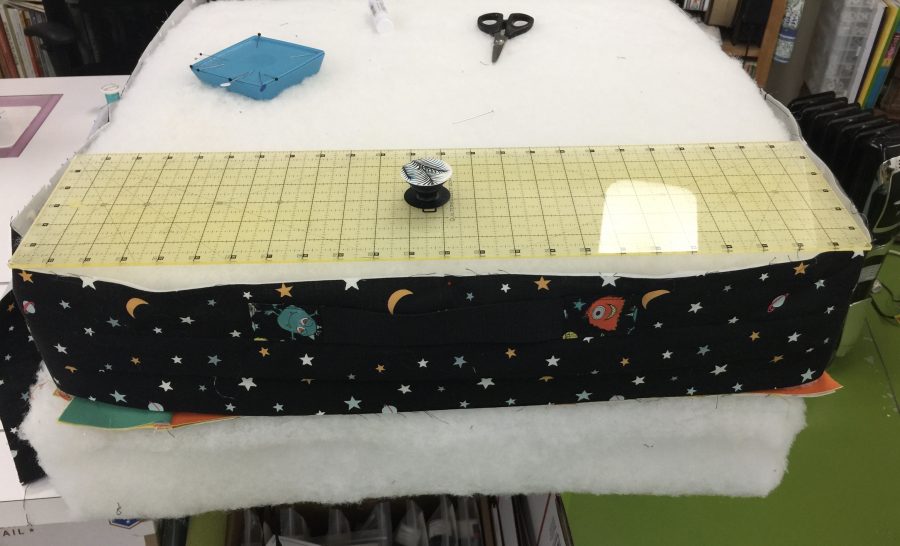
At this point, before sewing the second zipper garage, I place the gusset on the dacron-wrapped foam cushion for a test fit. You want it QUITE snug–fabric is flexible and you don’t want it looking stretched out and worn! Center the zipper on the one side, pinning the boxing/gusset onto the cushion from the sewn garage all the way around to the other side. Your excess fabric will create the second zipper-pull garage.
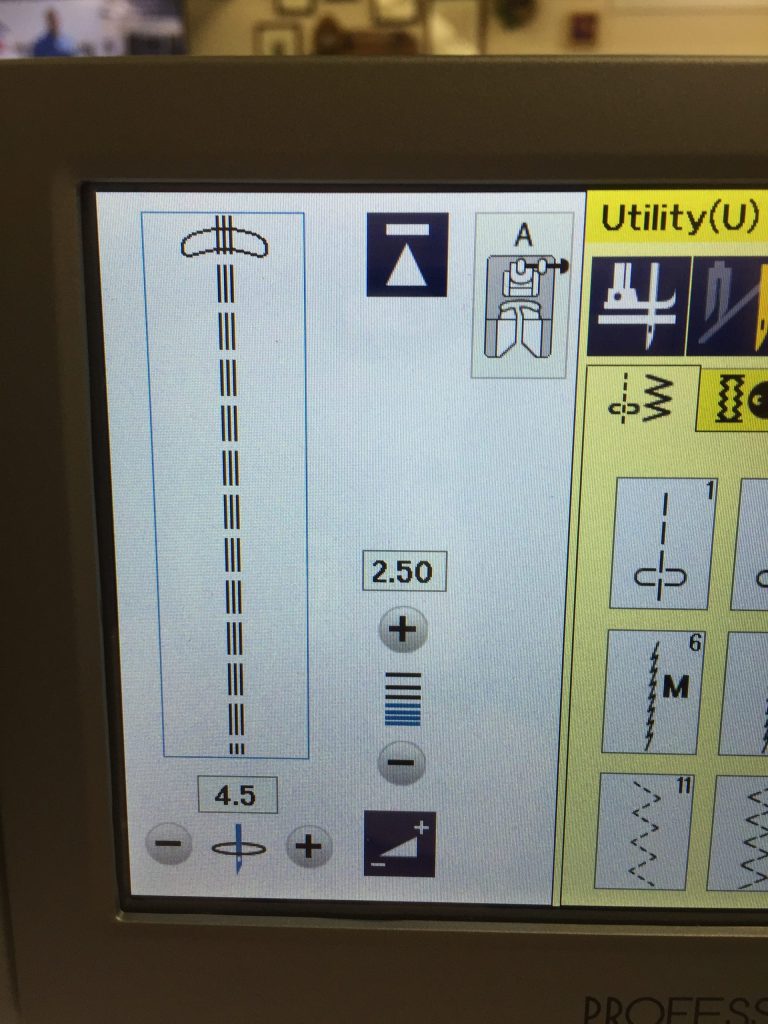
I like to use the triple-straight stitch, a basic stitch that is found on almost all machines other than straight-stitch only.
The photo waaaaay back at the top and this one show the stitched zipper garage. You might notice that I have also basted the sides of the garage within the seam allowance–it makes sewing the boxing /gusset to the top and bottom easier.

PHEW…that’s Zipper Wisdom according to Sarah. We are now blessedly done with the zipper–I swear it takes longer to explain it in writing than actually do it…well except for the fussing to make sure it is absolutely perfectly straight and nice! In my next post I’ll show constructing and stuffing the floor cushions. And, there are TONS of photos in the pattern, too. One more time, here’s the PDF for the Everyone’s a Kid Floor Cushions and Toss Pillows. Check back in 3 days for Part 2!

And one last minute goodie–my fellow Brand Ambassador Charisma Horton has made this adorable quilt out of different color ways of Super Fred–what a great combination for a kiddo: my cushions and pillows and her quilt! Check it out here on her blog, or the Far, Far Away pattern in her Etsy shop, in both download or paper versions.
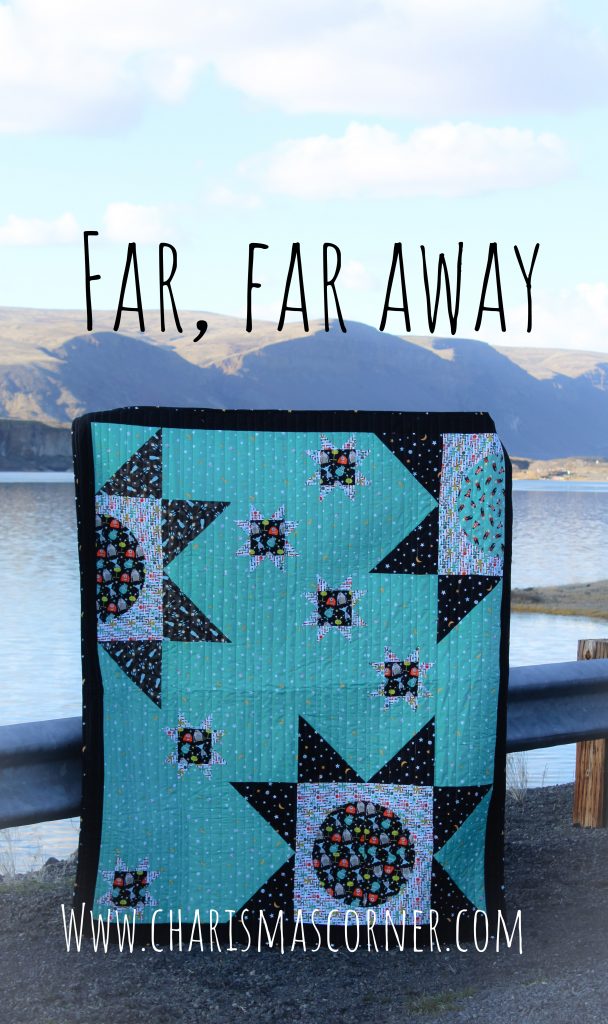
Both print and digital versions of Far, Far Away are available in Charisma’s Corner Etsy shop, here. Go to page 3 of the Etsy shop and scroll down to find the patterns.

Fabric requirements for two 24” square floor pillows and two 14×20” toss pillows:

Preshrink all fabrics!

NOTE:  Yardage is to make two floor and two toss pillows. Additional materials (zippers, foam and so on) as well as cutting and construction details in the free PDF show measurements and how to make each pillow. 
Available now–ask your local shop to order it

  • Focus Fabric 1:  Space Pals Black                 3/4 yard (will yield two 19” center squares)
  • Focus Fabric 2:  SuperFred Grey                 3/4 yard (will yield two 19” center squares)
  • Solids:  
    • Yellow                                         1/2 yard
    • Apricot                                        1/2 yard        
    • Acid                                            1/2 yard
    • Lilypad                                        1/2 yard
    • OPTION:  you can use the same fabric for all of the sides if you prefer
  • Boxing / sides fabric:  Galactic Black            2 yards

My interview with Create Whimsy

Friday, March 6th, 2020

I was absolutely delighted when Create Whimsy wrote to ask if I’d like to do a Spotlight interview with them–so many people I admire have interviews that you can still see and read. It was even more fun when the Editor, Chardel Blaine, realized that I had taught at a shop she worked at–Quiltworks Northwest in Bellevue, Washington–and we had met about 15 YEARS ago!

Here’s the link to my interview… I hope you enjoy reading the flotsam and jetsam of my life and mind. I opened up a half dozen interviews to review and prepare which led me to a new artist I admire, and I’m planning on opening another half dozen for lunchtime reading. Thank you Chardel and Create Whimsy!

Check box! TWO Ribbons!!!!!

Friday, February 28th, 2020
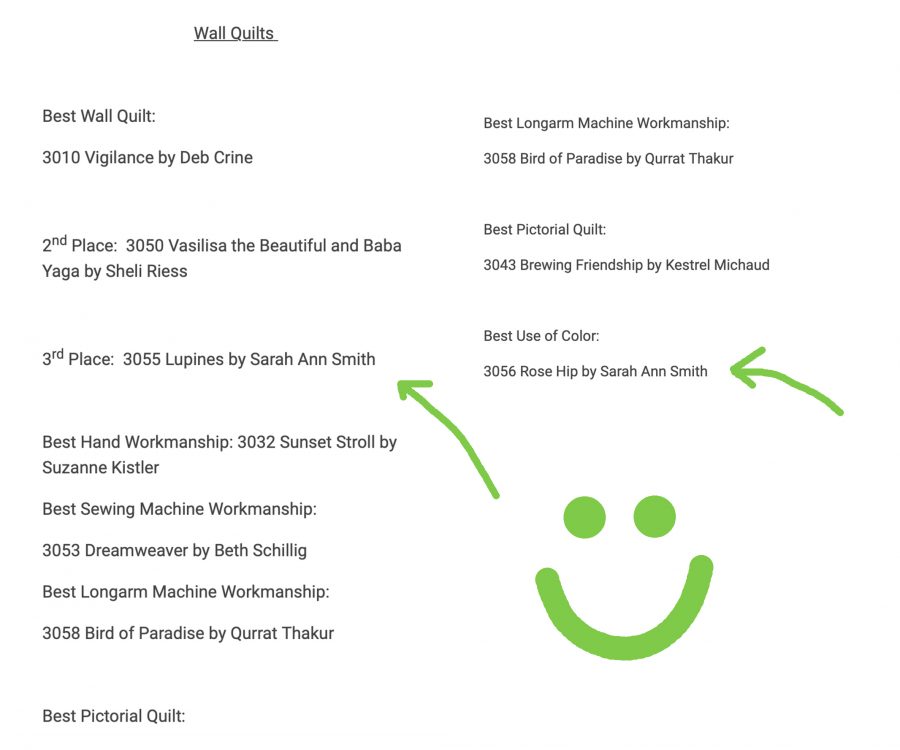
for Lupines and Rose Hip

And yes, I meant every single one of those excessive exclamation points. Usually I’m lucky to get two out of two quilts juried in to a given show. This time, not only did both Lupines and Rose Hip get in to the Mancuso Brother’s Mid-Atlantic Quilt Festival, they BOTH RIBBONED!!!!!! That is a bucket list item that I never, ever, Ever, EVER expected to check off! Guess what…done! To the judges: THANK YOU for making a dream come true!

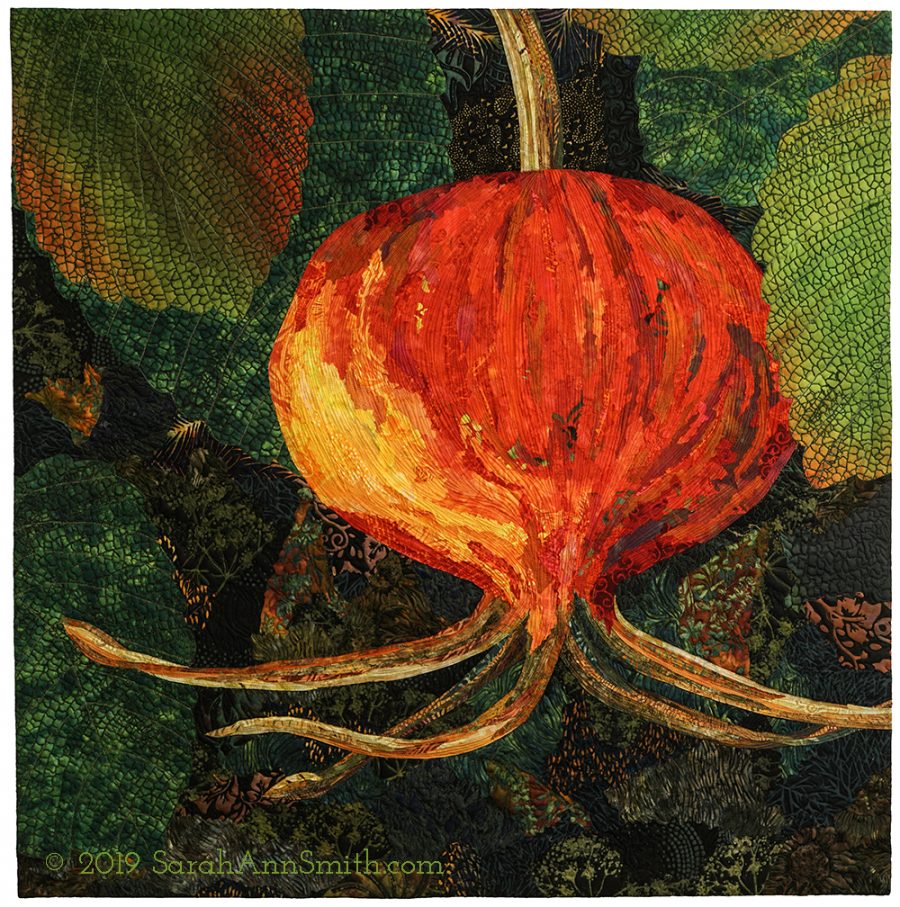
Rose Hip, by Sarah Ann Smith (c) 2019. 36″ square. This quilt won Best Use of Color in the Wall Quilts division at the show. One of my favorite quilts, in part because it is of my beloved Maine, but also because I’ve been able to meld my personal hand dyes, a hand dye by Lisa Walton, fabrics printed and over-painted by me, to create a cohesive image.

I’ve never won a prize such as Best Use of Color at a national level show, so I am particularly pleased–my work is about color, and then about the quilting. Next August 5-7 I’m going to be teaching a three-day workshop, Exploring Paint on Cloth, at ProChemical and Dye in Fall River, Massachusetts. I’ll be sharing the techniques I used in both of these quilts in that workshop and hope some of you can join me! Details in the hotlink. I’m deep in the planning for the specifics of what we can do in three days and getting so psyched for it!

Lupines won Third in Wall Quilts…given the quality of the quilts I am surprised, delighted, honored…. there are some mighty fine quilts in this show! And once again, to the judges: THANK YOU for making a dream come true!

When to pre-shrink!

Thursday, January 23rd, 2020

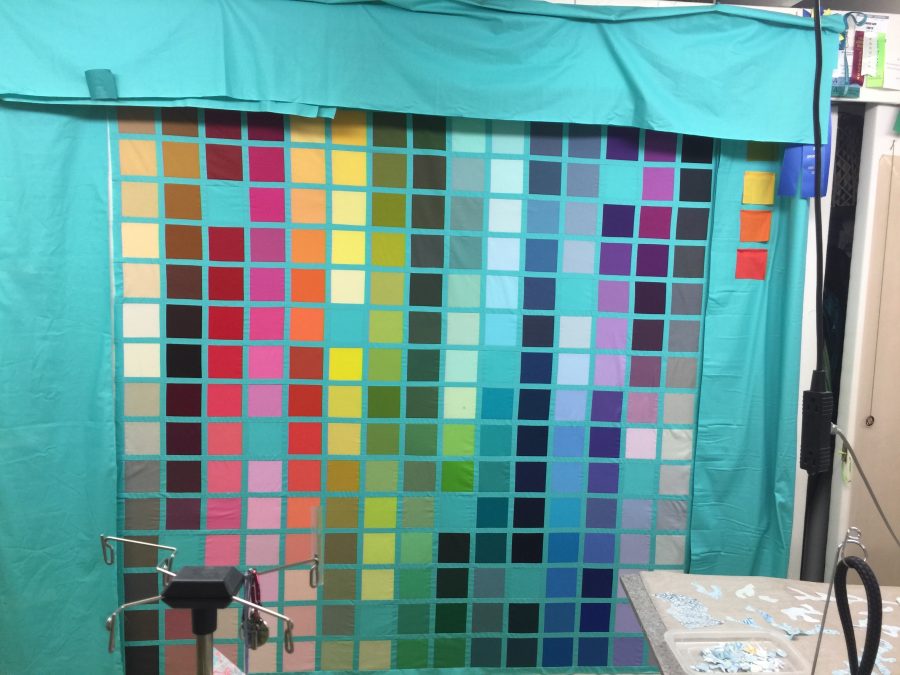
Over the past week to two weeks, I have been working on ….sit down and prepare yourselves for this… a **pieced** quilt. Yes, me. A very simple pieced quilt, but nonetheless.

Eye-candy…my 214 colors, test-driving super wide borders with possible squares or rectangles. I’m going with nothing to distract from that glorious grid of color. Hopefully the quilting will make the wide borders look good. Want them that big so they will fit on a king size bed–we’ve got a queen but the pug takes up a ridiculous amount of room for such a small dog! The center is 72″ and overall I’m hoping for about 100″ square.

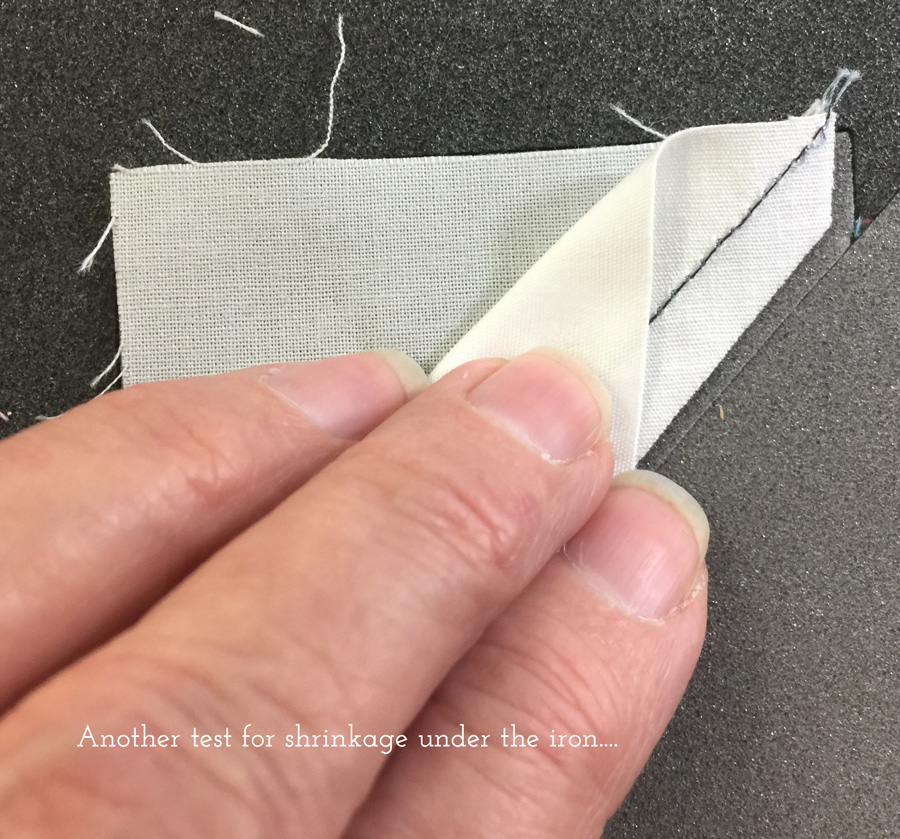
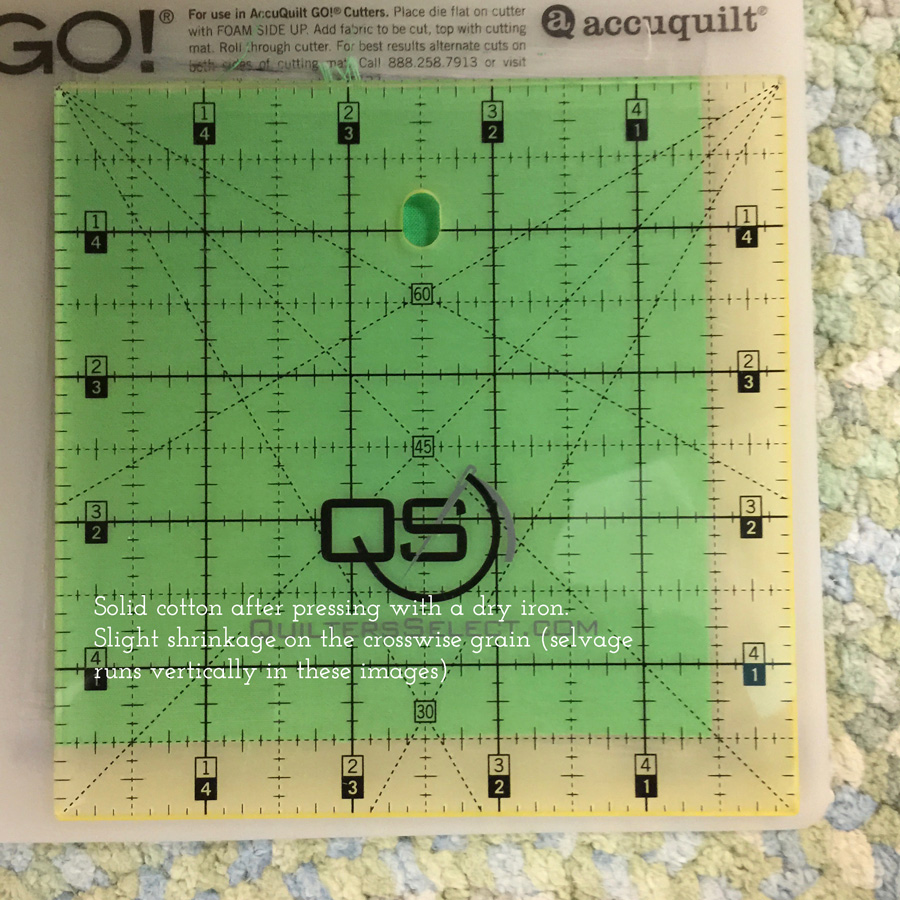
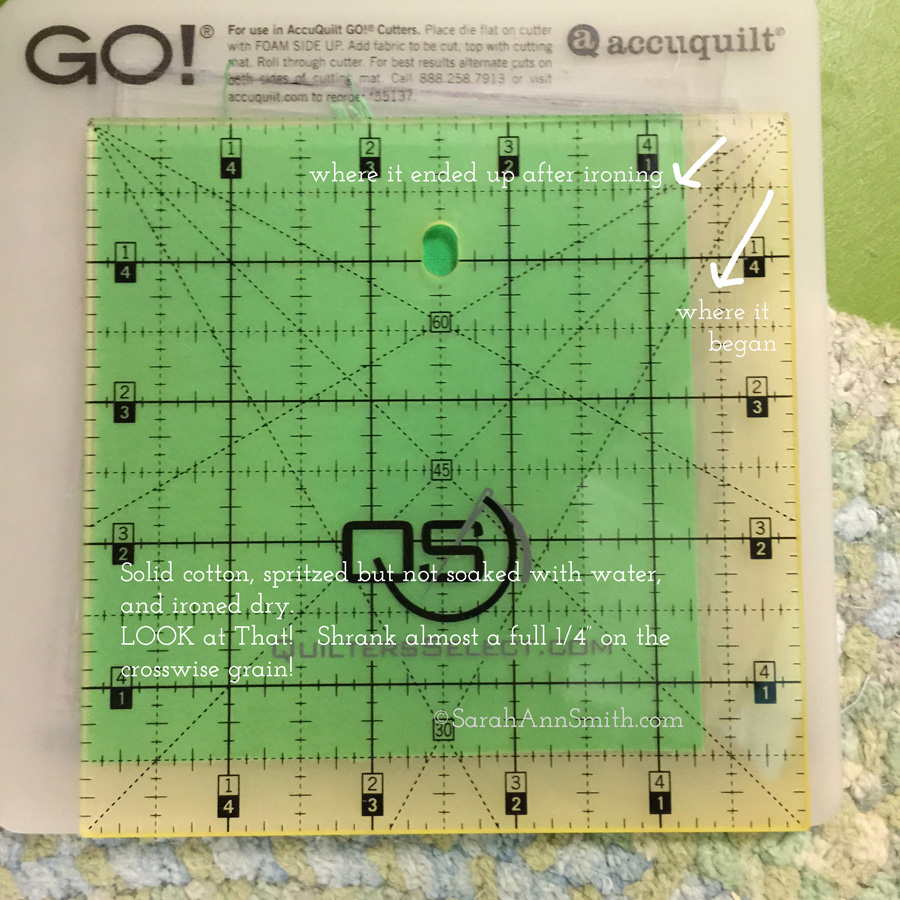
I’ve also been experimenting with the AccuQuiltGO! that was given to this year’s crop of Michael Miller Fabrics Brand Ambassadors. To my distress my block was not perfect–too small! I KNEW it had to be something on my end (it was), so I triple checked my seams (perfect to scant). I checked the size of the fabric cut on the dies: perfect. I checked that I used the correct dies: I did. Then I noticed something. After ironing, the block seemed off. Look at what I discovered:

First I placed my half square triangles on the dies, and look how much smaller the pieces are after sewing and ironing! So then I checked the start of the square-in-a-square center of the block. Same thing: after steam ironing/pressing, a unit that finishes at 2″ and one that finishes at 3 1/4″ are each 1/16-1/8″ smaller!

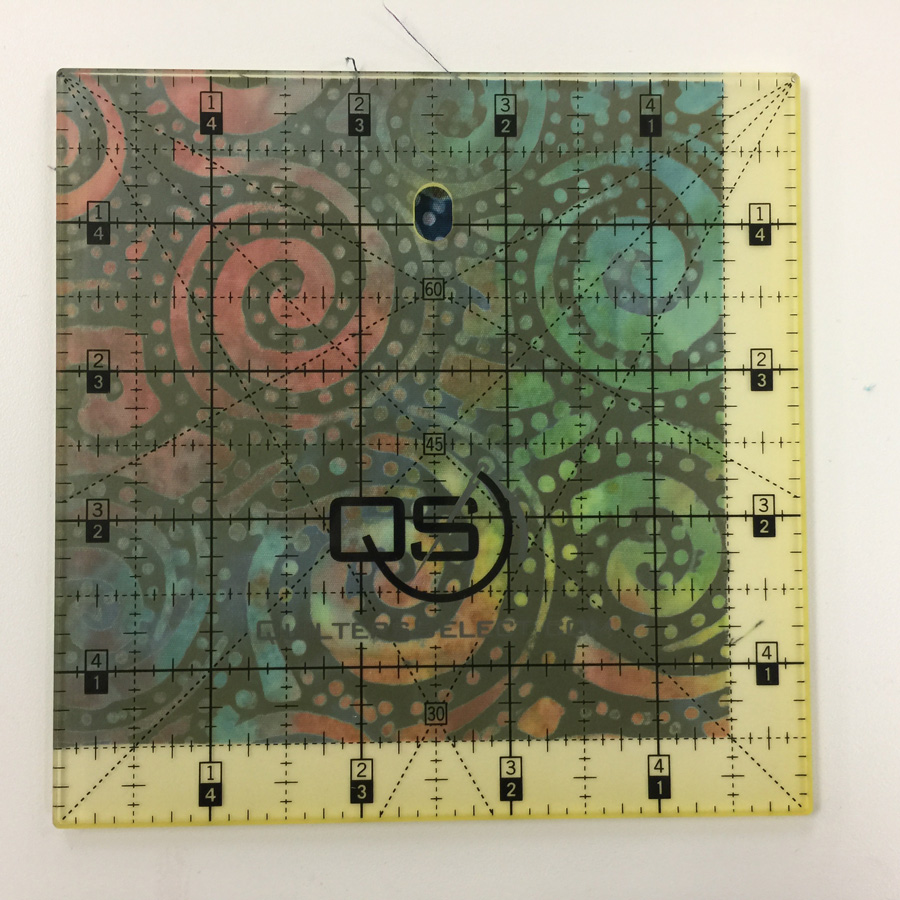
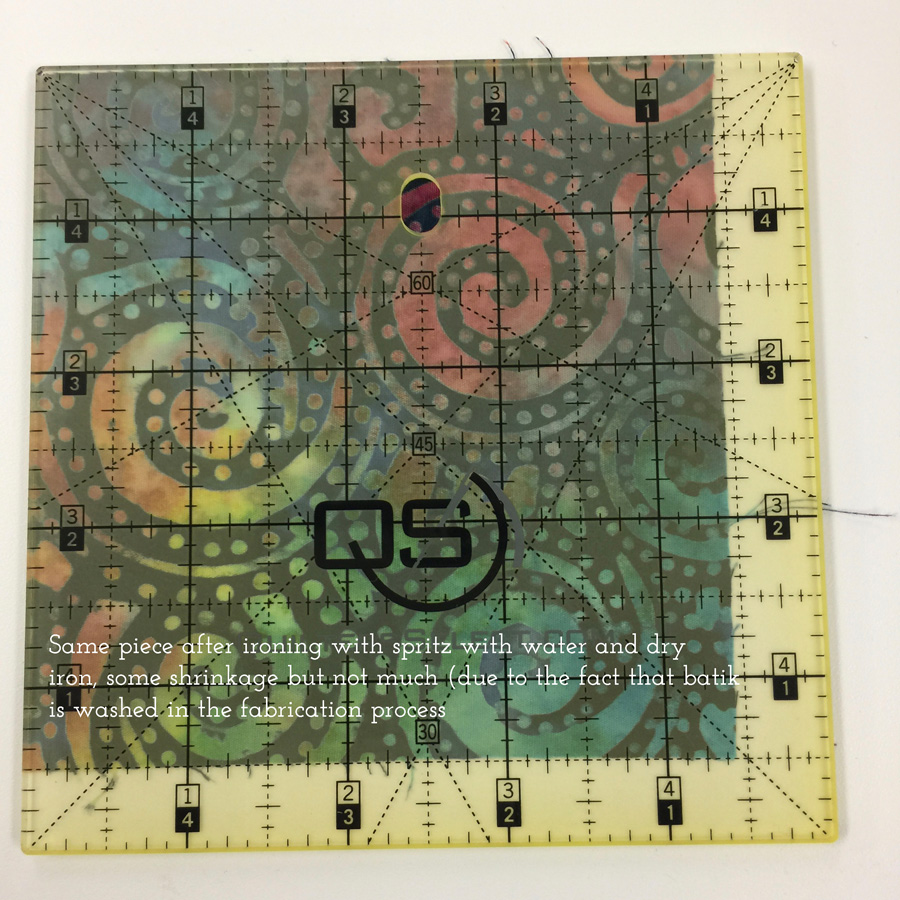
I decided to get a bit more scientific about it: Cut, measure, dry iron, measure, steam iron, measure. Here is what happened with the Cotton Couture, a delightful solid with a glorious feel in the hand:

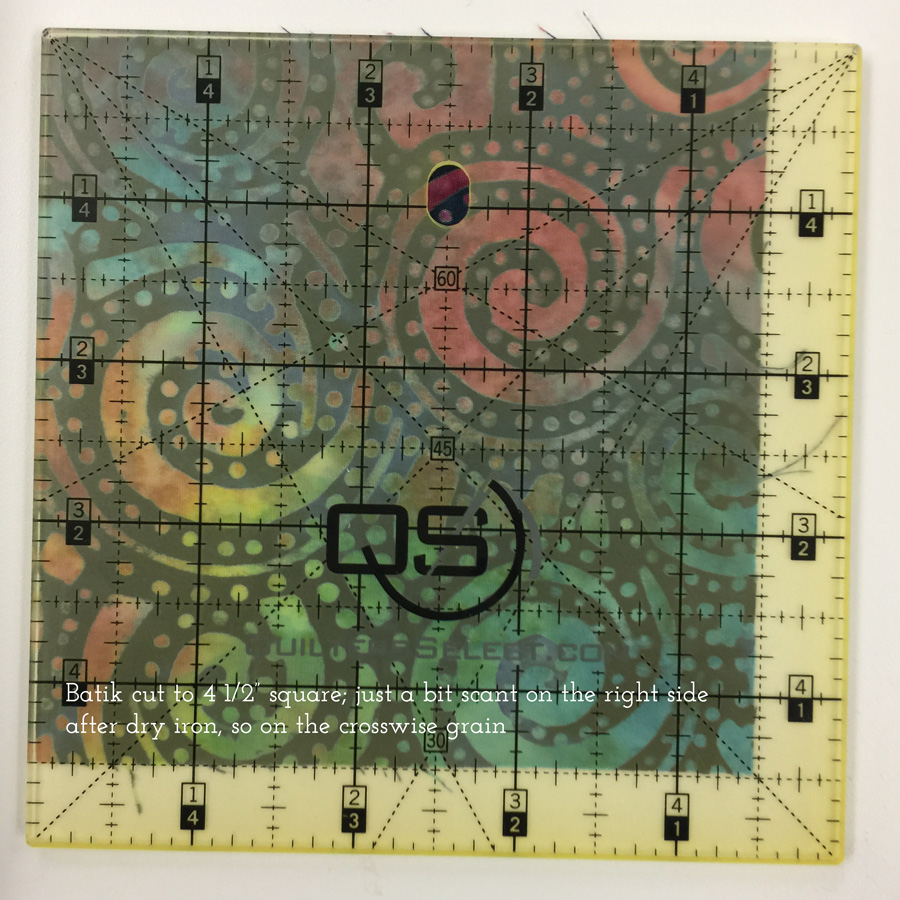
Batiks are made using hand-dyeing processes that include a resist being applied (usually wax of some sort), then the wax is washed out, more dye applied, and so on. This means some of the shrinkage should already have happened.

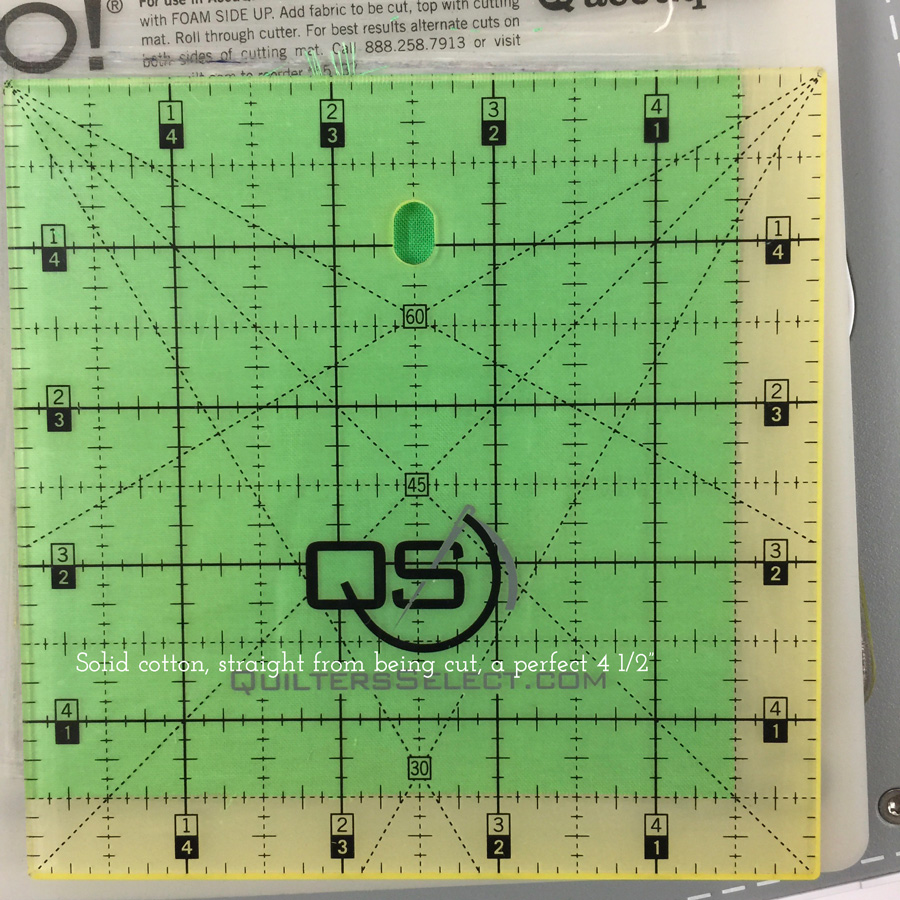
As cut with the AccuQuiltGO! Perfect 4 1/2″
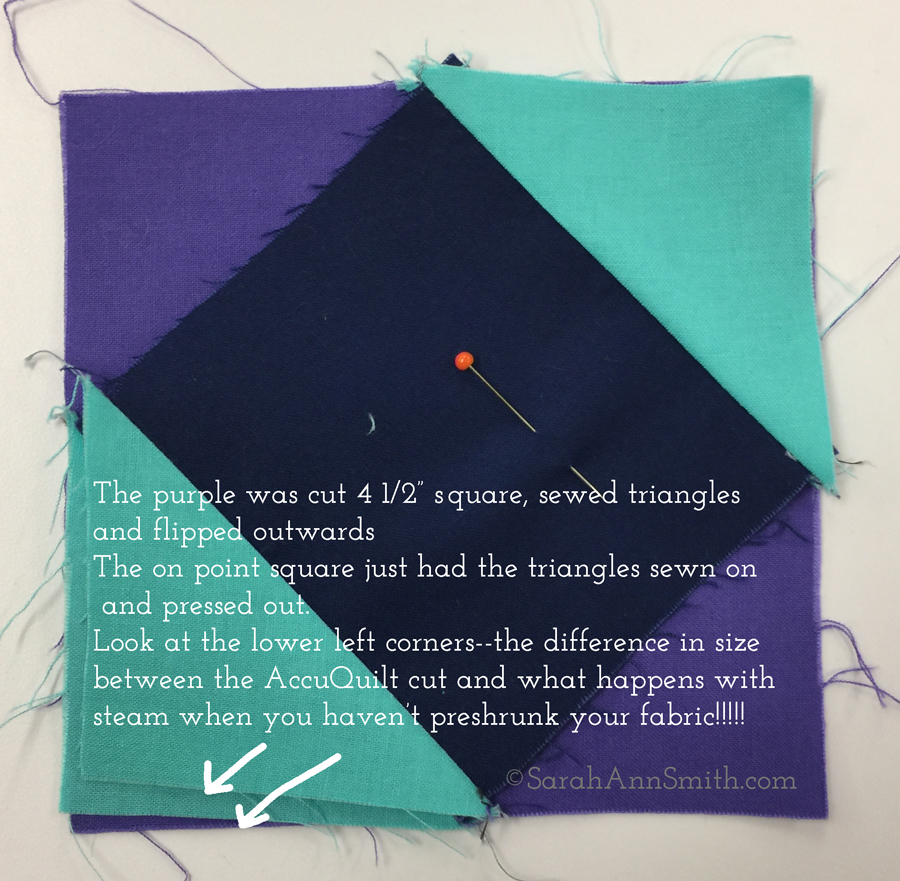
One last image: Here I created the center square-in-a-square for a pieced block. I cut the purple fabric to 4 1/2″ thinking that might help my accuracy, and sewed on two half square triangles. I then used navy for the central square and piled on identical half square triangles. All are cut with the lengthwise grain as suggested by Accuquilt for accuracy. LOOK at how much smaller due to more pressing and moisture from the iron. ERK!

So my lesson is, when I am not fusing things up, I really need to either pre-steam-iron everything, or prewash and mostly-dry it and then iron dry and smooth. I can now use the perfection of the AccuquiltGO and actually achieve as close to perfect as I will ever get! Now, off to order backing fabric for my BIG quilt.

The BRILLIANT new Janome M7Continental produces A York Pinafore for Christmas

Monday, December 23rd, 2019

Sewing machine companies are always coming out with new models, most of which are incrementally different from before. But every 10-15 years, Janome re-thinks the machine from all angles and comes up with something that is a major leap–and worth considering adding to your studio. The Janome 6600 was such a machine (circa 2004/5), and the new M7 Continental may well go down as one of The Best Sewing Machines Ever (in any brand!), and given the quality of Janome’s machines that is a high standard.

The Janome M7 Continental is a quantum leap in a sewing machine. Even if you aren’t in a market for a new machine, it is worth taking a look at this model. You might have something new on your wish list!

I have been dying to share with you the things I’ve been making, but most of them are Christmas gifts, so I can’t yet. But I made myself the York Pinafore from Helen’s Closet Patterns, so now I can finally tell you about this wonder with the dress as my example.

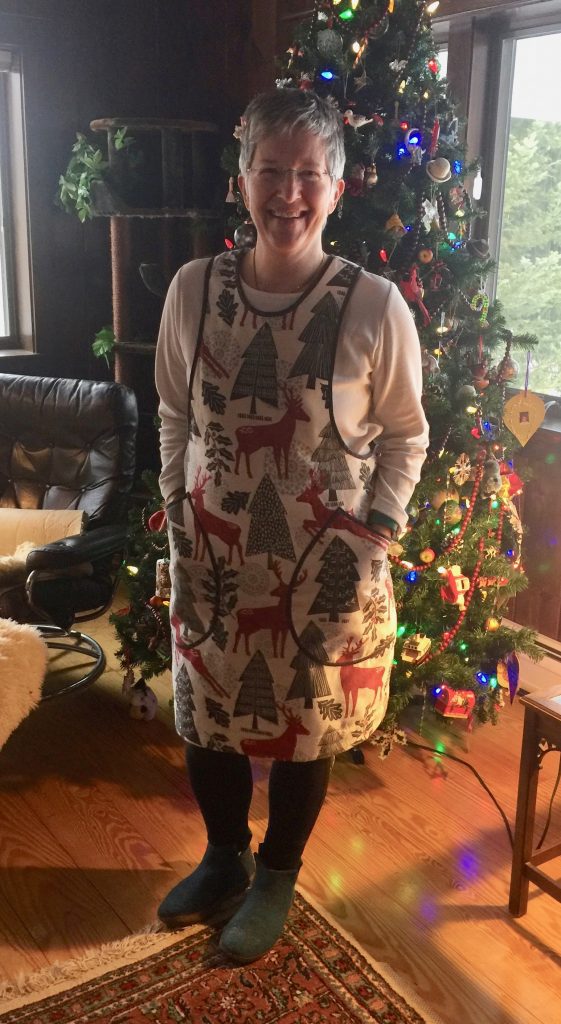
In my new “Pinafore” (which I would have called a jumper when I was a kid) in front of the Christmas tree. I’m particularly chuffed about how well the M7 and I worked as a team to get those pockets PERFECTLY placed to have the design flow.

When Janome comes out with a new machine, every single time I think “oh, I can’t give up the loaner I have” (I’m beyond fortunate to be a Janome Artisan so I get to try out their brilliant machines year after year), nothing can be better than this one. And then the new one is even better. Every single time they add new features that make me wonder “oh gosh why didn’t I realize that would be so wonderful.” The M7 is even MORE SO….read on!

The first thing I did, after cutting out the pattern, was to make a lining. I knew that using flannel that I intended to wear over leggings meant that the dress would stick like velcro. Fiddlehead Artisan Supply had a fabric I’ve not used before, Bemberg Rayon, for linings. The bolt end says dry clean, but we all know that can be ignored sometimes. I just bought an extra quarter yard to accommodate shrinkage and tossed it in a wash with hot water wash, cold water rinse, and hot dryer so it would do whatever shrinking it planned to do.

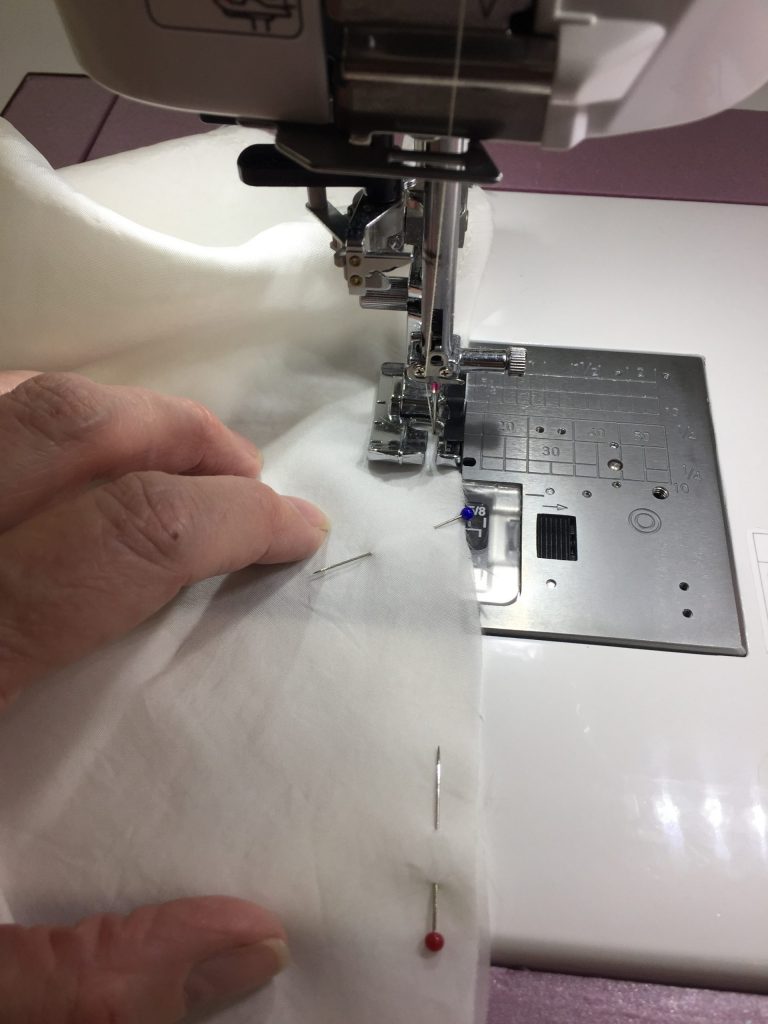
Then I cut, pinned, and started sewing. I probably should have used a thinner needle and the walking foot. I didn’t need to! The feed on this machine is so good that I had no issues going from thick flannel to silky thin rayon! Because rayon ravels, I used the quarter inch piecing foot to create a narrow seam that I turned into a French Seam.

A French seam is really a seam inside of another seam that completely encloses the raw edges. It is typically found in high end garments and used on fabrics that ravel.

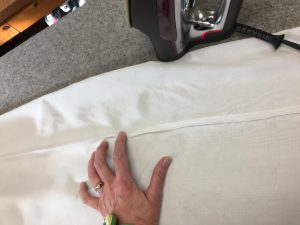
Once you have sewn the first seam, you press it as stitched to set the seams. It helps the thread sink into the cloth. Then you press the seam *open* which facilitates turning.

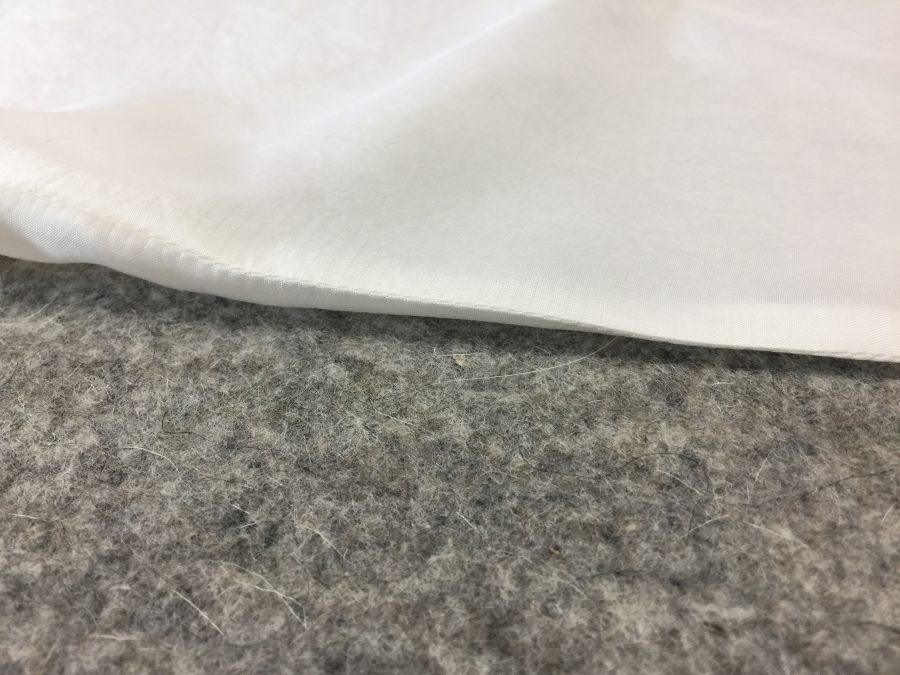
Then you fold the seam right along the stitching to create a “knife edge.” The best way to get the line perfectly on the edge is by pressing open (photo above) and then pressing flat. You can see how crisp and clean the edge is.

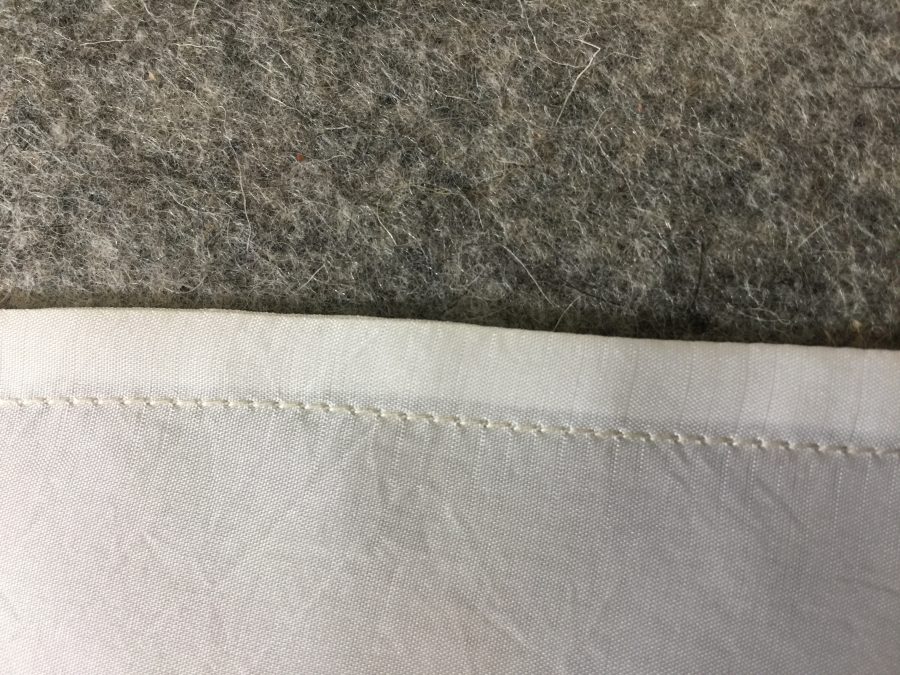
I used the quarter-inch foot with the edge guide but moved the needle to the left to 3/8″ from the edge to achieve this perfect seam. In this photo you can see the quarter inch encased and perfect stitching. The rayon won’t ravel ever!

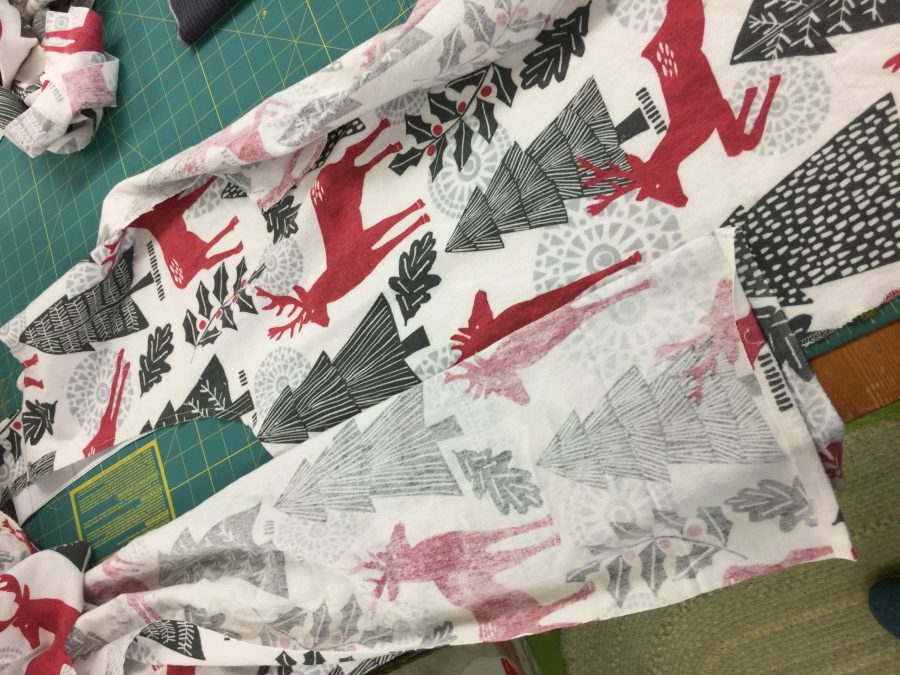
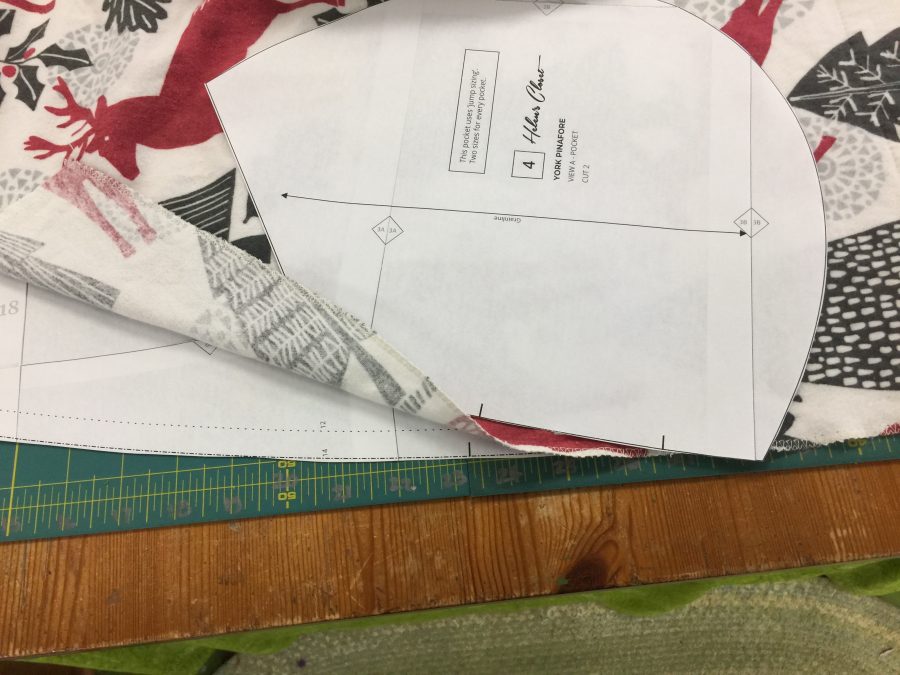
Here I’m matching the scraps and the front of the pinafore so I can cut the pocket pieces to exactly match!

Getting the design lined up perfectly to cut a matching piece for the pocket.

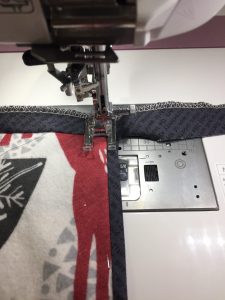
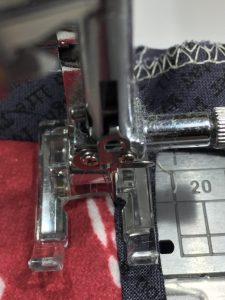
Here I’m stitching in the ditch for the opening of the pocket. I decided to outline the entire pocket with binding. I used the M foot and stitch 15 to overcast the edges as I did the gift bag in yesterday’s post. There are many ways to stitch in the ditch, including an edge-stitch foot that is included with most Janome machines, but personally I find I get my best results using the open-toe F-2 which offers the best visibility. I move the needle to the far right, set the right edge of the foot on the bias, and can get absolutely snug up next to the bias trim.

Now THAT is “stitching in the ditch.”

Throughout the process the M7 handled flawlessly–I mean FLAWLESSLY!

I can’t wait to show you more of what it can do.

Janome’s new slogan is Reliability by Design….I stopped to think about it: I have been sewing on Janome machines since 2003 and not once–let me repeat that, NOT ONCE– have I had an issue that was due to the machine. Once or twice due to operator error, but really, the machines have been utterly, totally and completely reliable. And each one gets better.

Lining done and waiting for the dress to be made.

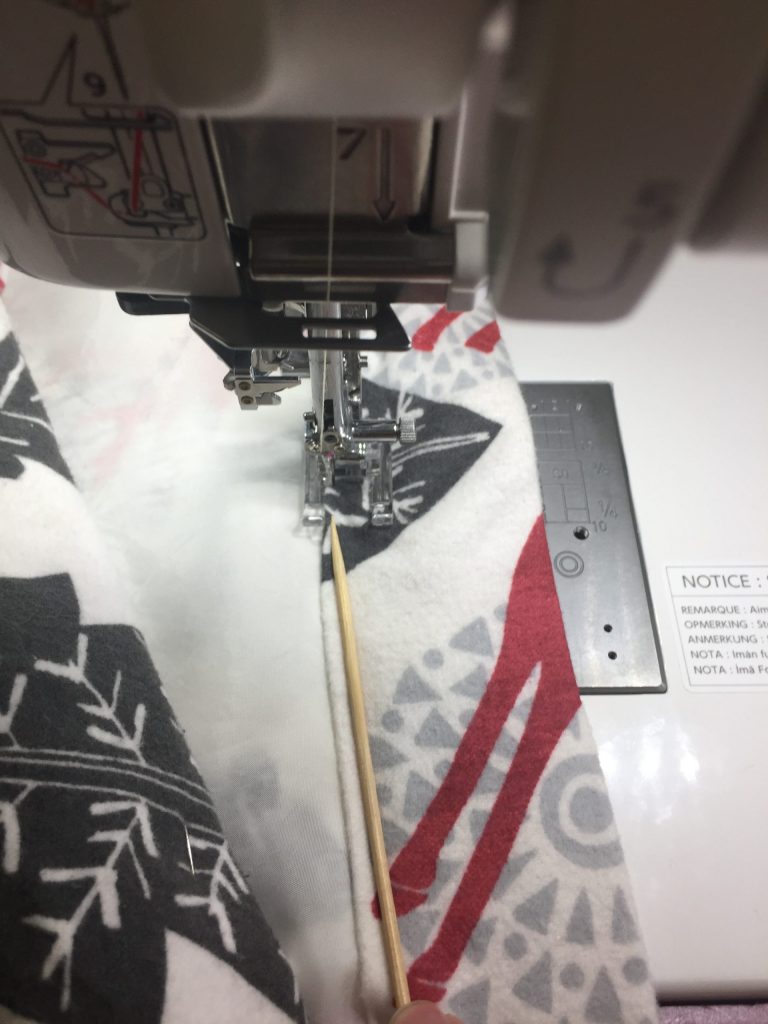
For hemming, I use the same foot and process, just move the stitch to the far left and adjust the needle drop (the Janome’s have so many needle positions you can get it perfect!). Because I have the rayon lining tucked inside the hem of the flannel outside, and because flannel is loosely woven and really quite stretchy, I use a bamboo skewer to press down on the hem. This compresses the hem, keeps it from rolling up, and controls the stretch. I hold the skewer in place and let the fabric feed underneath it–the tip of the skewer never gets up near the needle. The outstanding feed mechanism on the M7 meant I didn’t need to put on the AcuFeed at all… I couldn’t believe how easy it was!
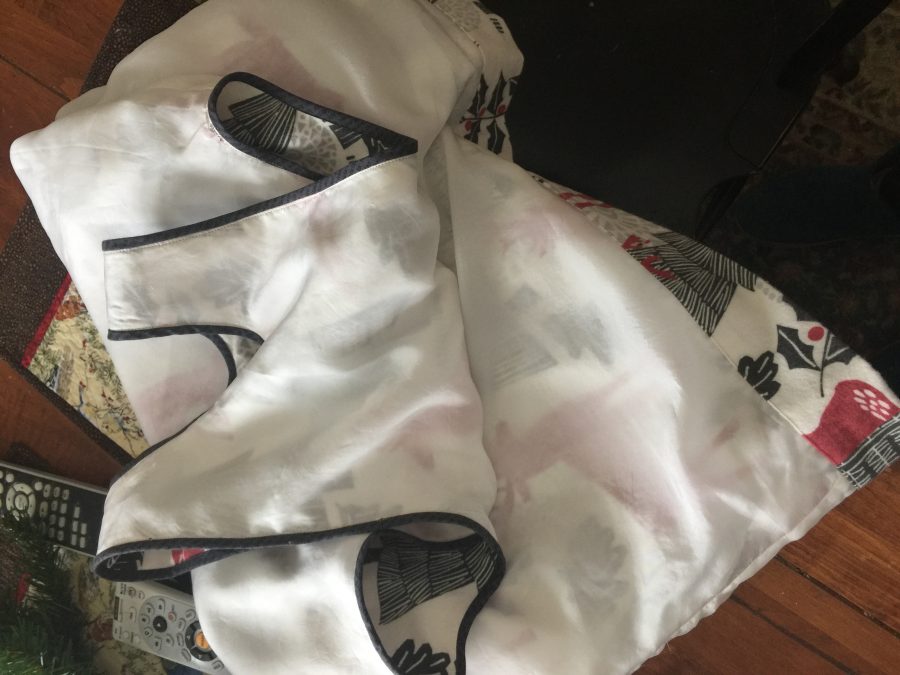
Here’s the inside: all seams contained between the lining and fashion (!) fabric/flannel. I tucked the lining dress inside the flannel dress and basted at the neckline and sleeves. The pattern calls for using bias a narrow facing, but I chose to go quilty and have the grey accent the edges. Then, very carefully because lining is so slippery, I measured the hem and tucked the lining inside (instead of having it hang loose as is more common) and hemmed the dress.
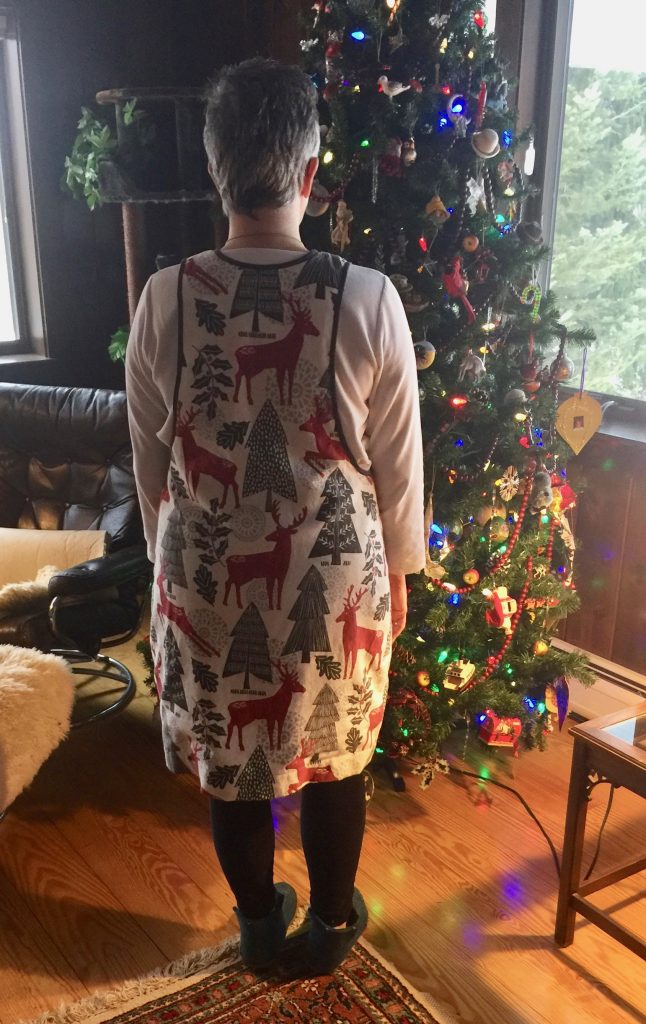
Dress from the back. If you are curious, put York Pinafore in the search box and Pinterest…SO many cute ideas, fabulous on a wide range of body types, and fast to make. I can see using a quilting cotton for a fun summer dress with tank or T underneath, and corduroy for winter.

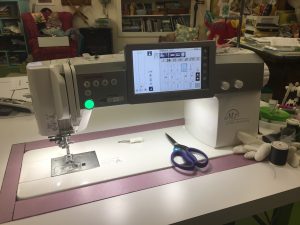
This new M7 Continental Janome is really something else, and although I am a Janome Artisan and affiliated, I would say all this if I had bought this machine at full retail. I’ll take you through some of the other marvelous things it can do in January and February. In the meantime, another small but marvelous detail: the thread stand has a COLLAPSING antenna.

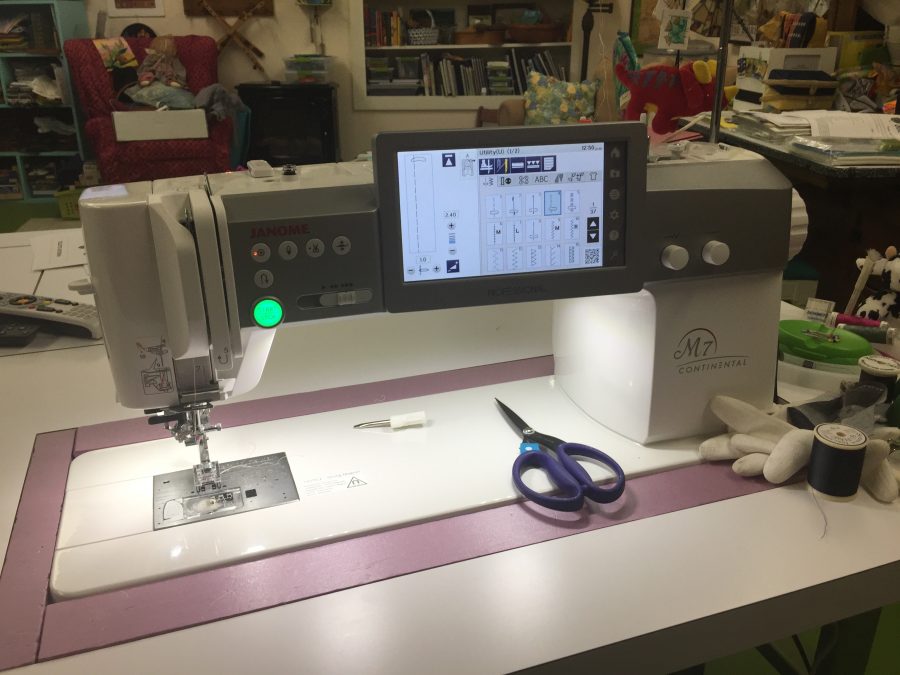
Here’s the machine again…it’s hard to see in the clutter of my room, but there is a thread antenna on the right rear of the machine.

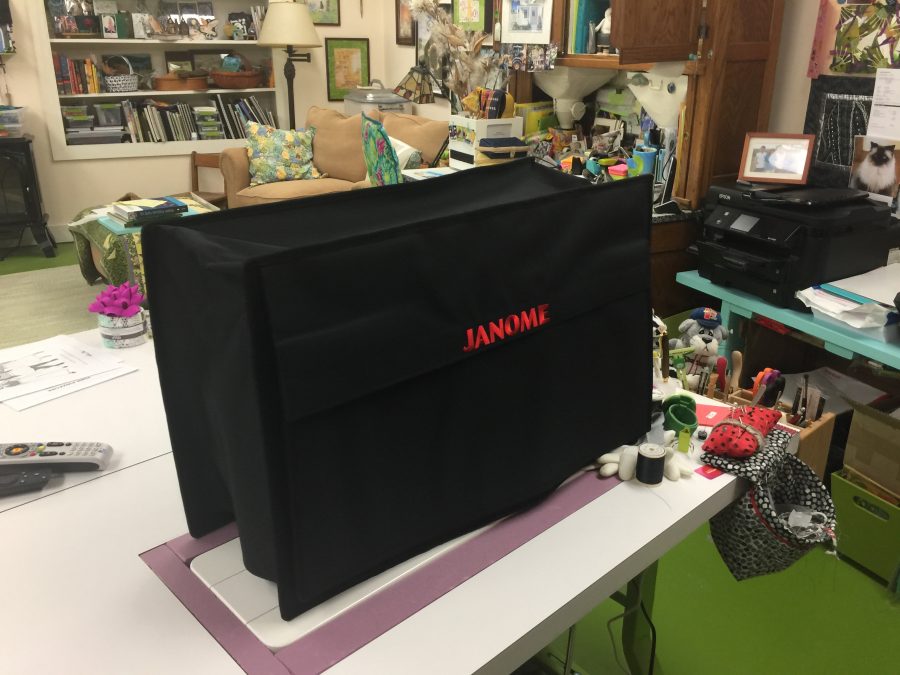
The thread antenna is telescoping, meaning you can push it down and then cover up your machine with the very good quality included cover! WOOT! PS: It also comes with a great extension table with a drawer in it, but even with its vast size (more on that later), I wanted to set it into my table. I cut rigid foam core to fill in the gaps. The mother of invention!